
The structures are still standing
On deep time and tampons

Next in-person workshop. Join me in San Diego from March 22-27, 2026, where I’m teaching a new class I call “Small Moment, Big Story,” about mining the smallest stuff of everyday life to write personal essays and memoir. This workshop is part of a multi-workshop retreat organized by Los Angeles Center of Photography, which means there should be lots of juicy cross-pollination opportunities across disciplines. I love that stuff. I’ve designed this curriculum to be useful for visual artists who want to use autobiographical writing in their projects, but really it’s for everyone, anyone who’s interested in using writing to better understand their lives. You can find more information here.
Next online workshop. This one is called “From Memory to Story,” and it’ll be January 13-30, Tuesdays and Fridays, from 9:30 to 11:30am Pacific Time. That’s six sessions, two hours each, and all will be recorded in case you’ve got to miss one. Learn more and sign up here.
You can find information about my upcoming workshops anytime, always, on my website.

Happy day-after-election day to my fellow progressive voters across the United States! Here in Seattle, I am proud to say that I voted for Katie Wilson in our mayor’s race. As of this writing, she is not winning, despite what looked to me like a slam-dunk campaign. Voter turnout in King County is abysmal, and I don’t know what it will take to get Seattleites to vote, if not — [waves arms in circular motion] — this whole situation. I hope to have cause to rewrite this paragraph once all the ballots are counted, but I am also tired.
It is no small thing to me that Katie Wilson is a woman and a mother, details that are not themselves sufficient or indicative of anything, but considered alongside her record as an organizer — wow, yes, I’m in. I want so much to see someone in charge who is not a man, who has been pregnant or worried she might be, who knows with her body that child care, elder care, and health care are not rewards for good behavior but the foundation of a functioning society. Each month, at some point during my period, I have a nice maniacal laugh-sob at how different our political landscape might be if every adult human had to bleed from a hole between their legs for four to six days per month. I experience great pleasure at the thought of Donald Tr*mp changing his tampon — not only because it’s gruesome and doesn’t feel very good, but because no one can do it for him. Even a king is alone with his tampon.
(Or maybe I’m mistaken? I mean, historically, would the handling of a monarch’s menstrual products have fallen under the purview of a handmaiden or, in this case, a valet? I just did an Internet search for “Did queens change their own menstrual products” and found no answer. Unrelatedly, but to my delight, the Internet did tell me that Queen’s University, of Kingston, Ontario, provides free menstrual products to students and staff in dispensers across campus, thanks to the menstrual-equity activism of a student club called Queen’s Period. ✊🏼)
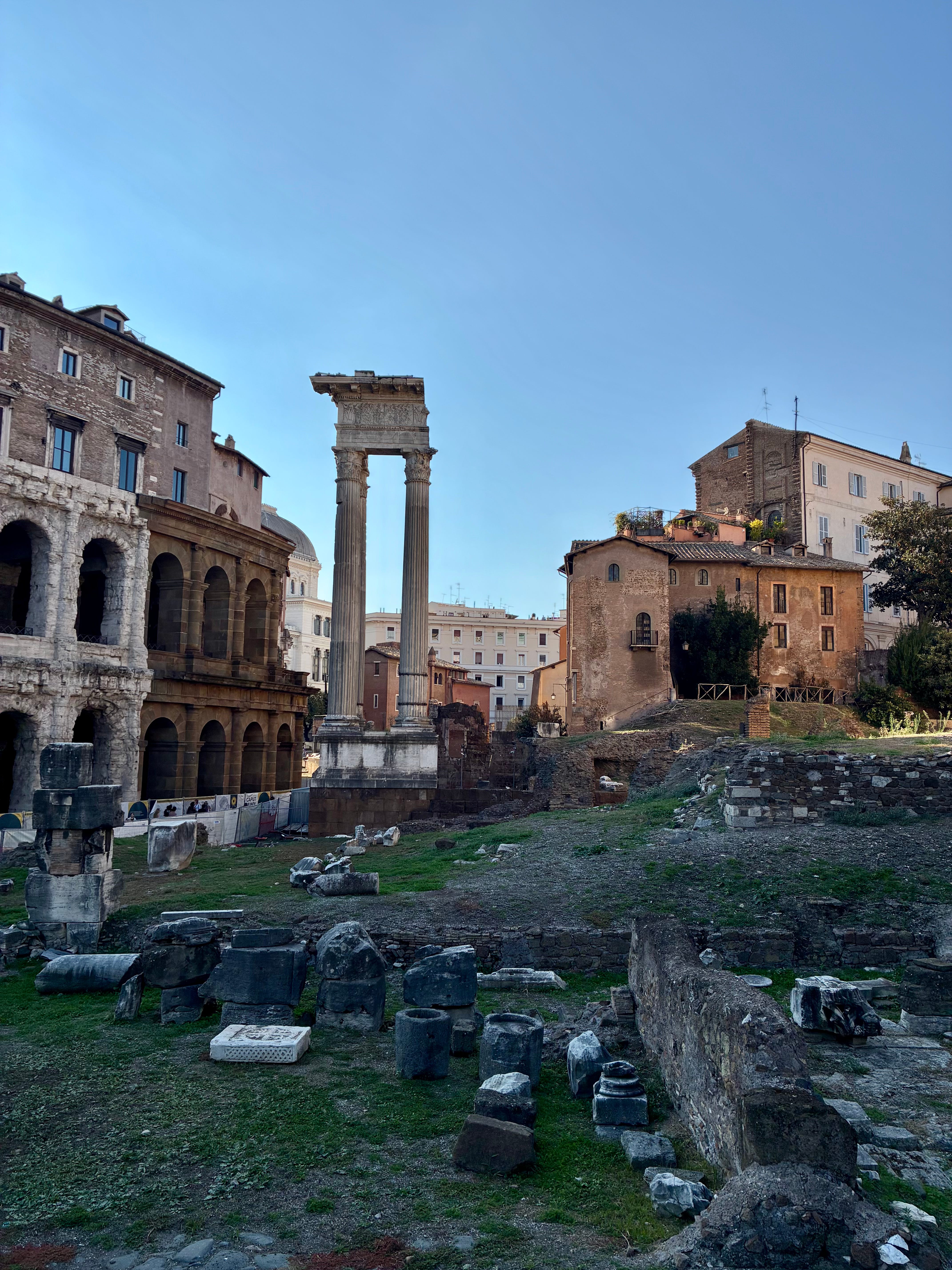
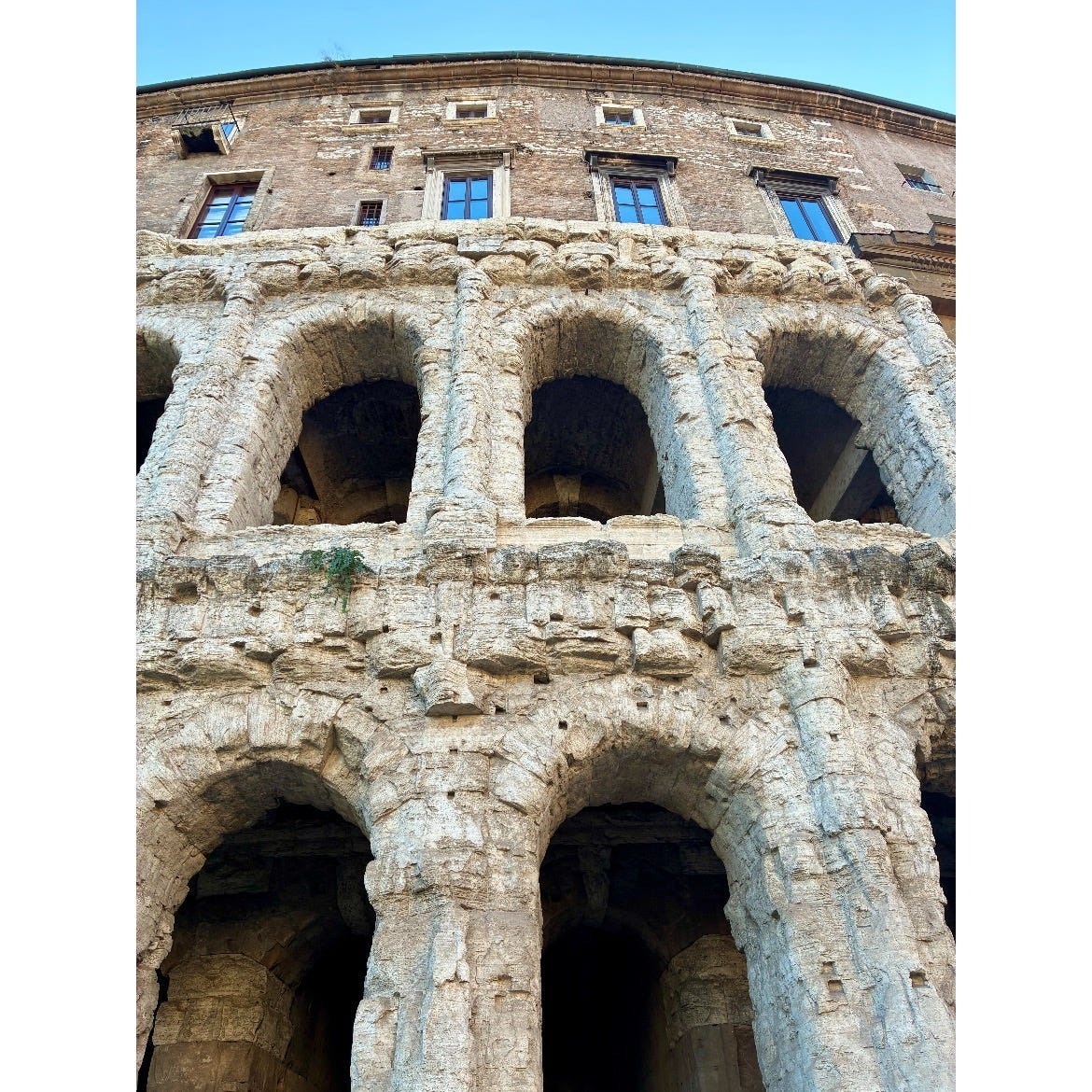
Speaking of history: in mid-October I went to Italy to teach a week-long writing retreat, and god, what a relief, what fucking medicine, to be reminded that members of our species have been arguing about the right way to be a civilization for as long as we’ve been bipedal, and to see their structures still standing anyway, through catastrophe and cataclysm.
I remember, during the early weeks of Covid lockdown, that there was a fact from high school history I’d think about when I needed comforting. It was that World War I had lasted from 1914 to 1918. Those dates had been abstractions to me when I’d learned them as a teenager. Even photographs of shelled cities and soldiers crouching in trenches didn’t seem real; those places, those battles, must have happened somewhere black-and-white, not in the full-spectrum light of Earth as I knew it. But in early Covid, when I really thought we might die, the dates of World War I suddenly came to me. Four years, each as solid and round as a marble. I could feel their heft now, roll them around in my mind’s hand. People survived four entire years under siege, I’d think to myself: four years of gunfire and grenades, homes destroyed, normalcy paused or obliterated for tens of millions across seventy countries. It had to have felt interminable, impossible to see a future beyond. But by the time I’d been old enough to learn about it, World War I had been safely folded into history, another story I could read in a textbook. Surely, hopefully, I thought, Covid will be like that. No matter how long it takes, surely it will end.
(I don’t know why I didn’t think about the 1918 flu pandemic instead of World War I. Also no idea why I didn’t think about World War II, which spanned a formidable six years? But I could never remember whether World War II started in 1938 or 1939, and the years 1914 to 1918 are so tidy and even.)
Of course Covid hasn’t ended, though lockdown did. Anyway, the war thing was not a perfect comparison, maybe not even a good one. I got to shelter at home with WiFi and Wordle and curbside grocery pickup. But thinking on a historical scale did help. It restored precedent to what, in my lifetime, had been unprecedented.
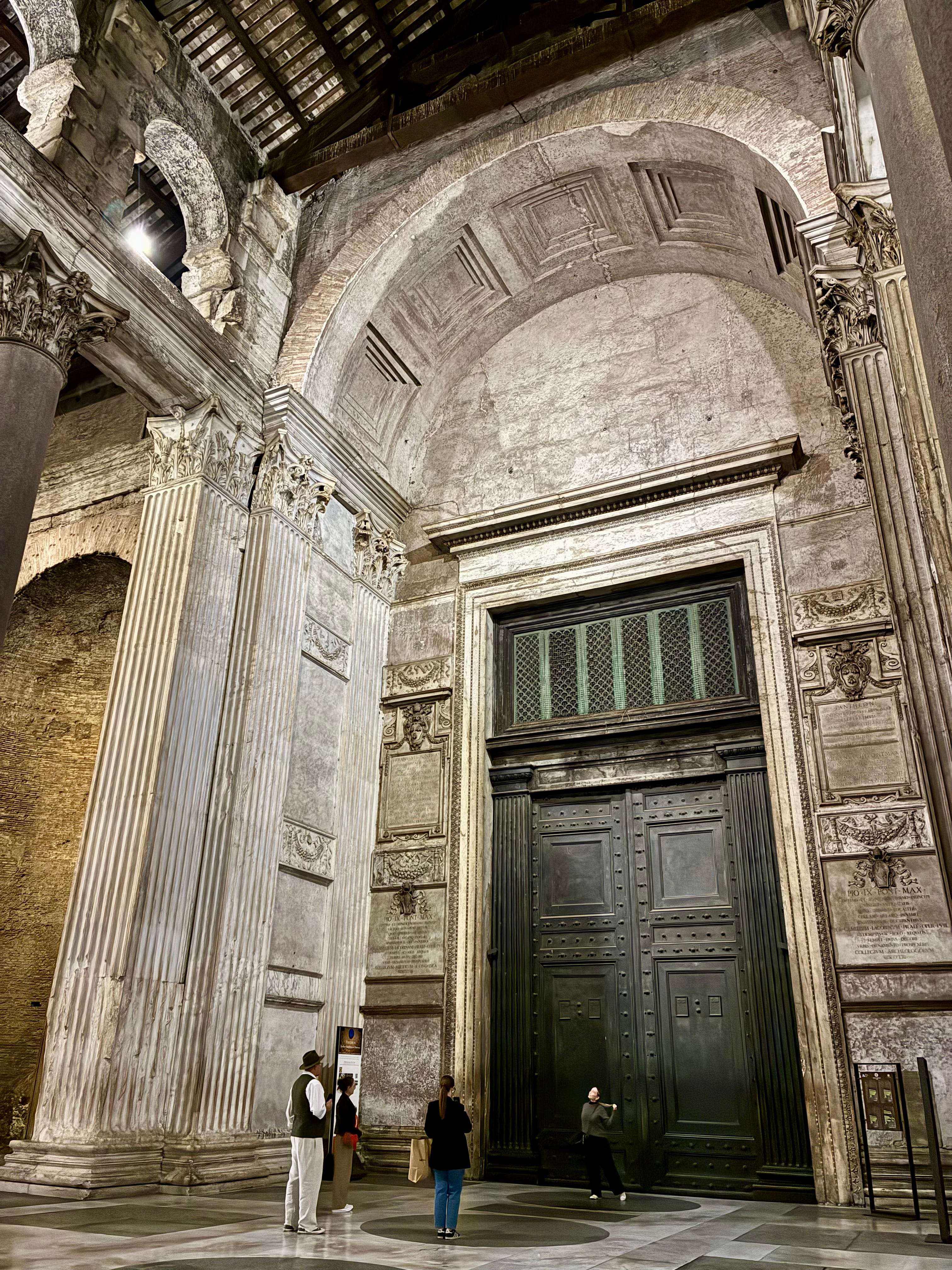
Going to Italy last month, I had to fly into and out of somewhere, and Rome offered the easiest itinerary. I landed there on a Thursday afternoon, with 44 hours to spend before I’d catch a train to Arezzo, to the retreat. Then, after the retreat, I would have another twenty-ish hours in Rome before my flight. I’d been to Rome just once before, for two or three days in 2009. What I remember most vividly is a bike tour of historic sites and monuments that a friend-of-a-friend had booked and invited me to come along. It was high summer, probably June, and we had a plucky Italian guide named Giorgia who rode at breakneck speed across deadly cobblestoned streets and through the hordes at Trevi Fountain. Once, for a matter of seconds, I lost sight of her and my friend in Trastevere’s warren of narrow streets, and I can still feel how adrenaline shot down my spine: I had no contact information for Giorgia or the tour company, and anyway, eSIMs didn’t exist yet.
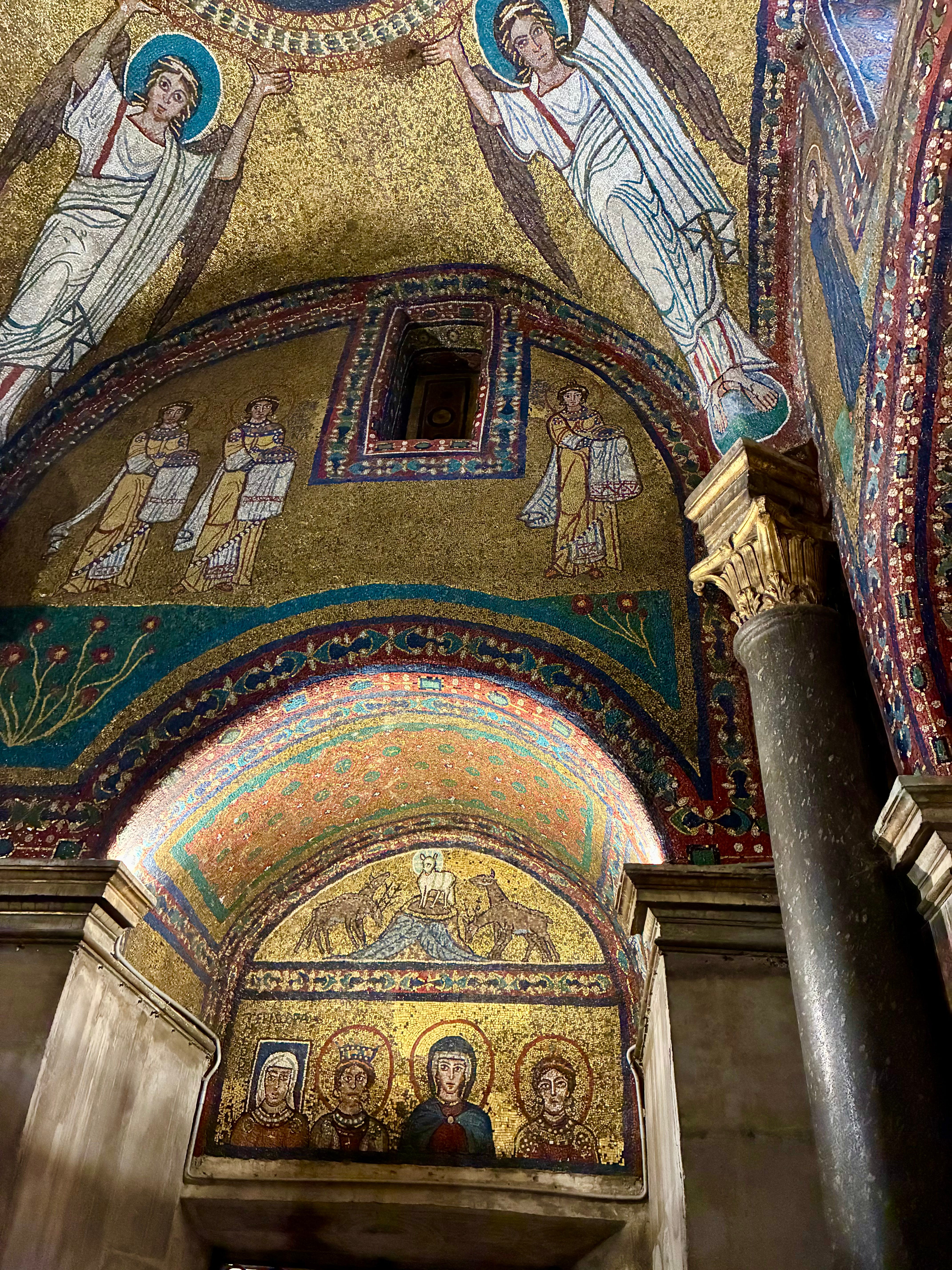
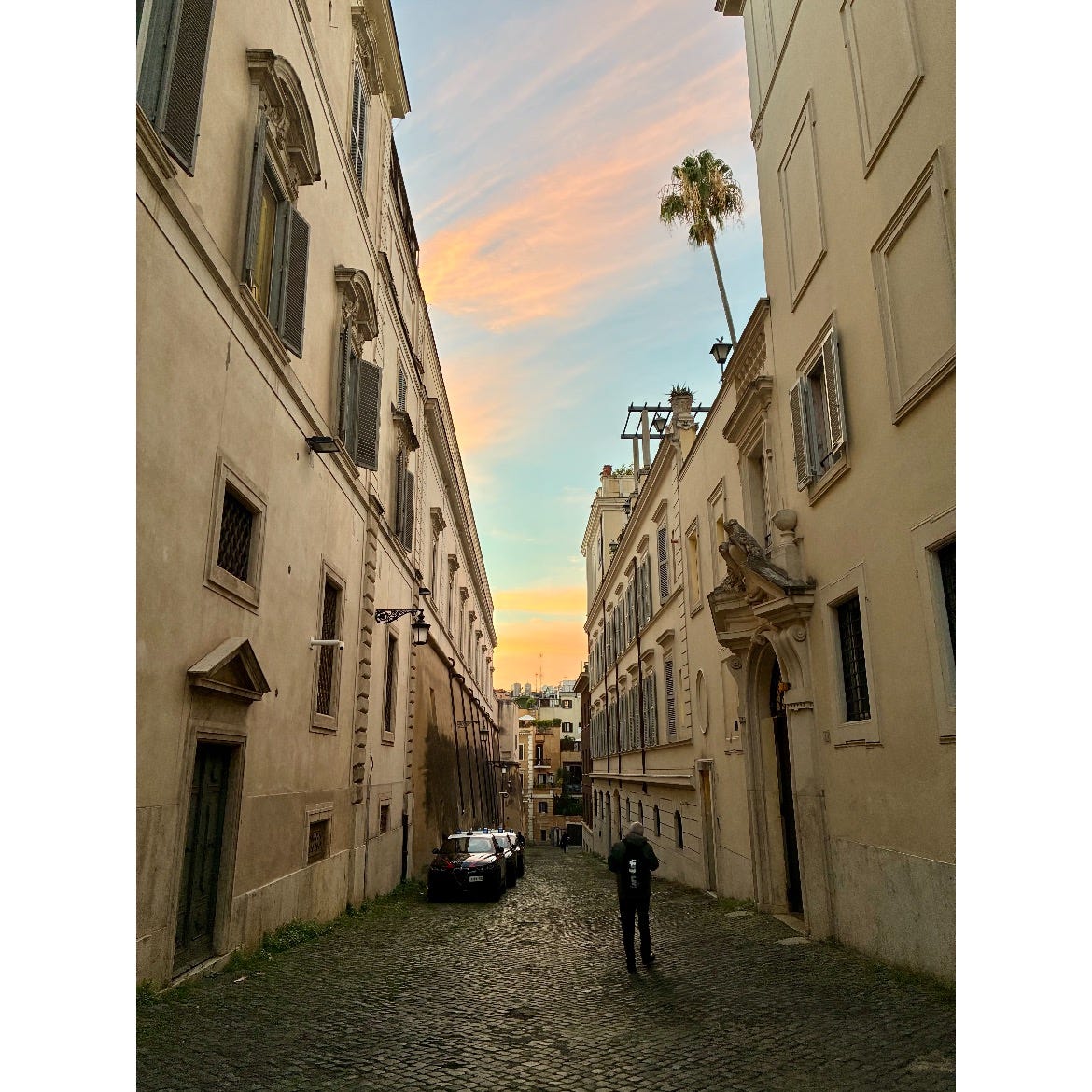
So I wouldn’t say I know the city well. But nothing will make you fondle the marbles of history quite like Rome will. One morning, you might be walking from your hostel1 near the Termini train station to buy a maritozzo for breakfast, and you’ll happen to notice, as you pass by a landmark basilica swarmed with tourists, that there’s a smaller basilica around the corner. It looks like nothing from the outside, but there is a small and scholarly-looking tour group gathering, so you decide to go inside. You notice a small archway on the left, which leads to a dimly-lit room lined with ornate mosaics from the ninth century. In an alcove, one of your fellow tourists takes a flash photo, which a sign beside her very clearly prohibits, and you step into the alcove with her, to see whatever she’s seen. It is an object behind glass, a column the size and shape of an elephant’s lower leg, marbled in black and white like a cake. A small plaque informs you that it’s the Holy Column, or the Pillar of Flagellation, the block of stone to which Jesus was tied and beaten during the Passion! You will read up on this later and learn that there are multiple alleged columns, which disappoints you, but only a little. You have stood in a room where, more than a thousand years ago, people stood and gazed at the same sights. You are only the latest link in this chain, and soon others will stand here instead.
To walk in Rome is to trip constantly over moments like these. I thought about the concept of “deep time,” which Wikipedia defines as geological time that spans billions of years, far beyond the scale of human experience. To walk in Rome, to move my body through the tangible evidence of history: the word I want to use again is relief. It offers a chance to think in deep time — of course not in the sense of the cosmos, not in the sense that the phrase is intended, but in a sort of Honey I Shrunk the Kids way. In Rome, became very small. Even Donald Tr*mp became small, with a wittle itty bitty tampon. Mussolini was here, I thought, and now he is gone — a revelation that does not look brilliant when typed out but nonetheless gave me comfort, and still does. It is likely that nothing about this feeling will hold for long, given that we’re contending not merely with fascist authoritarians and genocides, but also with rapid global warming. But still.
On the morning of my outbound flight to Rome, sitting at the gate at SeaTac, I’d perused the Substack app, as one does.
, the writer behind The Examined Family, had just published an interview with Oliver Burkeman. Burkeman is the author of Four Thousand Weeks: Time Management for Mortals and Meditations for Mortals, both of which are books I have learned a lot from, though I’m allergic to the phrase “time management.” His approach to time is refreshingly pessimistic, the same kind of cold comfort I get from standing in the shadow of a two-thousand-year-old building.In his interview with Courtney Martin, which I recommend reading in its entirety, Burkeman says,
I think that when we’re struck by the feeling that everything is changing and nothing about the future is certain, what we’re actually doing is more clearly noticing something that was always true.
He continues: “[The reality that everything has always been changing] doesn’t make it easy to bear, necessarily, and it certainly doesn’t mean that any given change is as good or bad as any other. . . . But it does mean that the sheer fact of everything changing and the future feeling uncertain isn’t a sign that anything’s wrong; that’s just the situation in which every person has existed since the beginning of humanity. So it’s also the context in which anyone has ever created art, fallen in love, raised kids, gazed at the stars, cooked a meal for a neighbor, had one too many cocktails, gone hiking in the mountains, or done anything else worth doing.”
Onward, I think? Onward.
Rome in October is $$$! I tried to save a little money by staying in a hostel, where I still spent $125/night for a twin bed in a room with four other women. I arrived to find the room empty and stark, with scuff marks all over the wall beside my bed and a single small window waaaaaaay up near the ceiling. I had made a terrible mistake. But later that night, after a long walk and a full meal, I returned to find I had real living roommates: one from South Korea, another from Spain, an Italian, and another who I only ever saw asleep. They were lovely, and without saying much, we kept each other company. I wish it had been cheaper, but I think I’d do it again.
“Even a king is alone with his tampon” sentence of 2025
Hey Molly, here on the east coast we’re reveling in decisive wins for 2 women, both moms and democrats, in NJ and VA. on top of electing Mamdani for mayor in NYC, a young democratic socialist, we’re feeling like the backlash has begun. so sorry to hear that Seattle was a different story. the rest of your post — a pleasure to read!